
Socializing a Rescue Dog: A Step-by-Step Guide
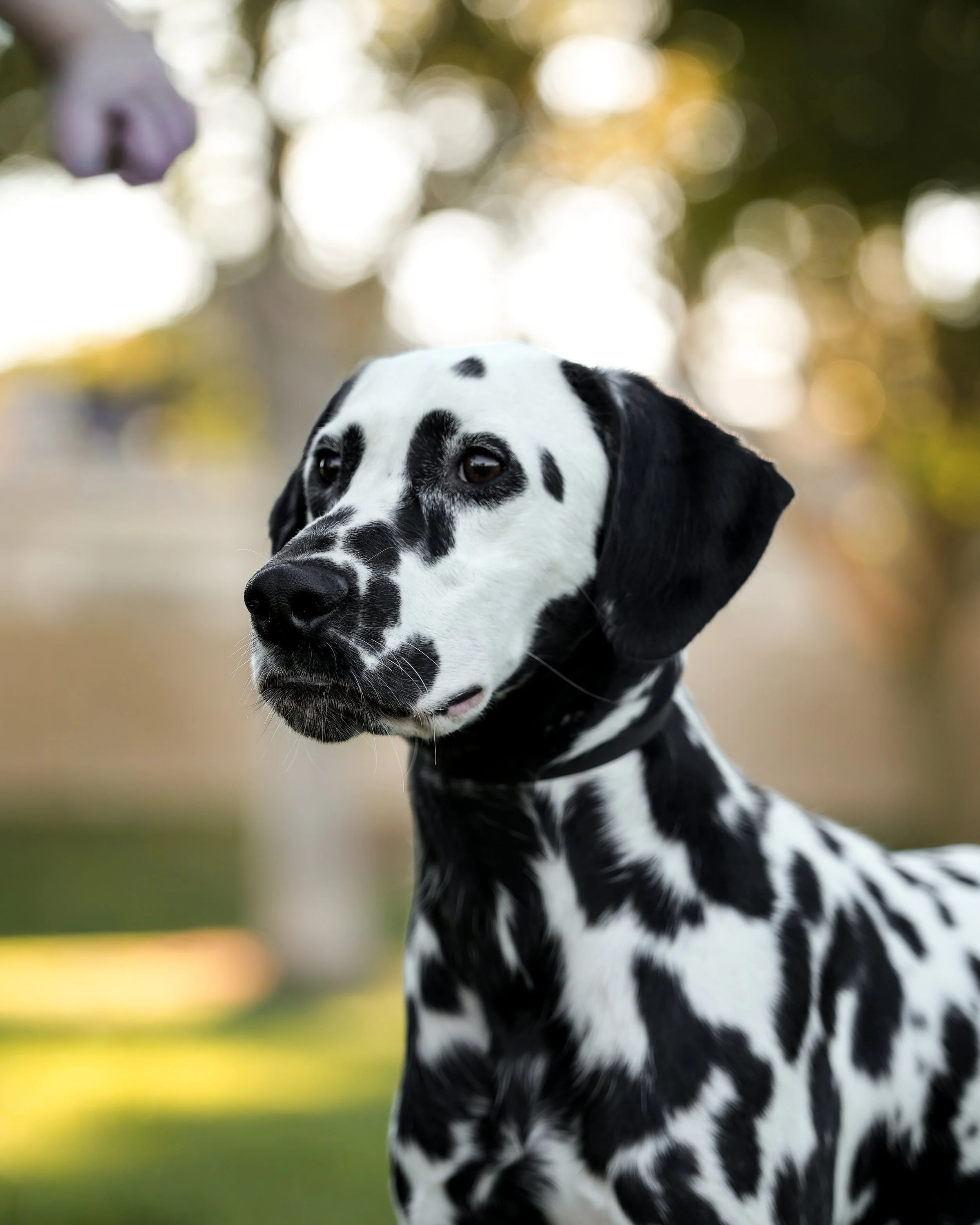
Pongo
Bringing a rescue dog into your home can be incredibly rewarding, but socialization is one of the most important—and misunderstood—parts of helping a rescue dog adjust to their new life.
A rescue dog may have limited experience with people, dogs, new environments, sounds, or everyday life. Some dogs are confident and curious, while others may be fearful, overwhelmed, reactive, or simply unsure of how to navigate the world.
Socialization isn’t about forcing your dog to meet everyone and everything. It’s about teaching them how to confidently exist in the world.
Here is a step-by-step approach to helping your rescue dog build confidence, communication, and trust.
1. Get to Know Your Dog & Build Your Foundation
Before taking your rescue dog into busy public places, take the time to get to know them.
Your dog has just entered a completely new environment, and they need time to decompress and learn who you are. Pay attention to what makes them comfortable, what motivates them, what they enjoy, and what causes them stress.
Do they love food? Toys? Praise? Exploring? Playing? Sniffing? Being close to you?
Learning what your dog values will help you build a relationship and create motivation for training.
Start with the basics at home, where distractions are minimal.
Work on:
Their name
Engagement and checking in with you
Sit, down, and place
Recall
Basic leash manners
Impulse control
Boundaries
Marker words
Crate training
Calm behavior and settling
Teaching these skills in a familiar environment gives your dog a foundation they can eventually take into the real world.
Don’t rush outside just because you can.
If your dog doesn’t understand leash pressure, basic commands, or how to engage with you in the quiet environment of your home, adding people, dogs, cars, noises, and new environments can make learning much more difficult.
Build the communication between you first.
2. Slowly Introduce the Outside World & Controlled Socialization
Once your dog understands some basic expectations at home, begin taking those skills outside—but start with low-distraction environments.
Go for quiet walks. Visit less busy areas. Let your dog experience new smells, sounds, surfaces, and sights without overwhelming them.
Practice the skills they already know while gradually introducing more distractions.
Let them watch the world move around them.
As they become more comfortable, slowly increase the difficulty by introducing:
New locations
Different surfaces
New sounds
More people
Cars and bikes
Different environments
Calm, neutral dogs
When introducing your dog to another dog, start with distance and control. Walking parallel to a calm, neutral dog can be a great first step. They don’t necessarily need to interact face-to-face.
You can also have them settle near another dog on a designated “place” while maintaining enough distance for both dogs to remain comfortable.
The goal isn’t immediate interaction. The goal is neutrality and confidence.
Your dog should learn that seeing another dog doesn’t automatically mean they need to rush over, bark, play, or become overly excited.
As your dog becomes more confident, you can gradually expose them to more challenging environments and distractions.
Think of socialization as building a ladder—you don’t need to jump from your living room straight into the middle of a crowded event.
3. Teach Appropriate Social Interactions
As your dog becomes more comfortable in different environments, you can begin allowing appropriate interactions with people and dogs.
If someone wants to meet your dog, you don’t have to automatically say yes. Consider your dog’s comfort level first.
Your dog should learn that they can calmly exist around people without needing to greet everyone they see.
Dog-to-dog greetings require even more consideration.
On-leash greetings can be challenging, especially for dogs who are reactive, overly excited, fearful, or inexperienced.
Before allowing your dog to interact with another dog, consider:
Do you know the other dog?
Is the other dog comfortable around unfamiliar dogs?
What is their body language telling you?
Are both dogs relaxed enough to make good decisions?
Is the interaction appropriate for your dog?
Are they trying to play, communicate, avoid, or control the interaction?
Understanding canine body language is incredibly important. Not every interaction that looks like “dominance” is actually dominance, and not every playful interaction is appropriate.
Socialization does not mean your dog needs to greet every dog.
Sometimes the best socialization is simply walking past another dog calmly and continuing on your way.
4. Learn New Things Together & Have FUN!
One of the most overlooked parts of socialization is simply building a relationship with your dog.
Try new things together.
Explore new places. Learn new skills. Take a class. Try a dog sport. Go hiking. Practice cooperative care. Work on tricks. Try scent work, dock diving, rally, agility, or another activity that fits your dog’s personality and physical abilities.
New activities can be especially valuable for rescue dogs because they give them opportunities to succeed.
Instead of focusing only on what your dog struggles with, give them opportunities to discover what they are good at.
You may be surprised by what you find.
That nervous dog who didn’t want to leave the house may love scent work.
The dog who struggled around other dogs may discover that they absolutely love dock diving.
The dog who seemed uninterested in everything may become incredibly engaged when given a job.
Socialization Is a Lifelong Process
Socialization doesn’t end once your rescue dog can walk through a pet store without reacting.
It’s an ongoing process of exposing your dog to new experiences, teaching them how to navigate the world, and building their confidence along the way.
Most importantly, don’t rush it.
Your rescue dog doesn’t need to become everyone’s best friend. They don’t need to play with every dog. They don’t need to love every person or enjoy every environment.
The goal is to help them become a dog who can confidently experience the world, communicate appropriately, and trust you to guide them through unfamiliar situations.
Slow down. Build trust. Create success. Have fun.
Sometimes the most beautiful part of rescuing a dog is watching their personality emerge once they finally feel safe enough to show you who they really are.